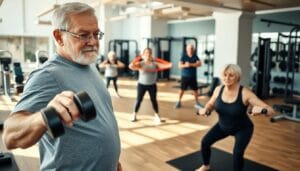
As we age, staying active becomes more important than ever. Yet, only 15% of individuals aged 65-74 engage in regular physical activity. For many, mobility challenges or health concerns can make traditional workouts difficult. That’s where seated activities come in—offering a safe and effective way to maintain strength and flexibility.
Physical therapist Tobi Jevnikar highlights the benefits of these routines, noting they help improve muscle tone and flexibility. Beyond that, they can combat conditions like osteoporosis and reduce the risk of heart disease. The best part? No gym equipment is required, making it accessible for everyone.
Whether you’re looking to stay active or support a loved one, these activities provide a simple yet powerful way to prioritize health and well-being. Let’s explore how you can stay fit while seated.
Key Takeaways
- Only 15% of seniors aged 65-74 engage in regular physical activity.
- Seated activities are safe and effective for maintaining strength and mobility.
- They improve muscle tone, flexibility, and overall health.
- These routines can help prevent osteoporosis and heart disease.
- No gym equipment is needed, making them accessible for all.
Introduction to Chair Exercises for Seniors
Staying active is a universal need, regardless of age or ability. Physical therapist Tobi Jevnikar emphasizes,
“Everyone at every age and ability can benefit from exercise.”
Seated activities, which involve modified movements using stable seating, are an excellent way to stay fit. These routines are particularly beneficial for addressing age-related deconditioning and mobility challenges.
According to the National Academy of Sports Medicine (NASM), engaging in 2-4 weekly 30-minute sessions can significantly improve physical health. These activities are not only for those with limited mobility but also for wheelchair users and individuals with balance concerns. They provide a safe and effective way to maintain strength and flexibility.
Research shows that just two weeks of inactivity can lead to measurable declines in fitness levels. This highlights the importance of incorporating regular movement into daily routines. Seated activities offer a practical solution, ensuring that everyone can stay active and healthy, regardless of their physical limitations.
Benefits of Chair Exercises for Seniors
Physical movement plays a vital role in enhancing quality of life, particularly for those with limited mobility. Seated activities offer a safe and effective way to maintain strength, balance, and overall health. Research shows that these routines can significantly improve daily functioning and reduce health risks.
One of the most notable benefits is the 40% reduction in fall risk through improved leg strength. Enhanced balance also leads to better posture alignment, supported by NIH research. Additionally, pelvic tilts combat swayback-related lower back pain, improving flexibility and reducing discomfort.
Core engagement during leg raises prevents muscle strains, while the release of endorphins enhances mood. These activities also support diabetes management by regulating blood sugar levels. With endurance benefits comparable to standing aerobics, seated routines are a practical solution for maintaining health.
| Benefit | Impact |
|---|---|
| Improved Leg Strength | 40% reduction in fall risk |
| Enhanced Balance | Better posture alignment |
| Core Engagement | Prevents muscle strains |
| Mood Enhancement | Endorphin release |
| Diabetes Management | Blood sugar regulation |
These routines not only promote physical health but also contribute to emotional well-being. By incorporating seated activities into daily life, individuals can maintain independence and improve their quality of life.
Who Can Benefit from Chair Exercises?
Maintaining physical activity is essential for overall health, especially for those with specific health challenges. Seated routines are designed to meet the needs of diverse individuals, including older adults and those with mobility limitations. These activities are adaptable, making them suitable for a wide range of conditions and abilities.

For individuals recovering from surgeries like hip replacements, seated movements such as sit-to-stands can aid in rehabilitation. These low-impact routines help rebuild strength and improve mobility without straining the body. Similarly, those managing chronic conditions like arthritis benefit from gentle movements that reduce joint pain and stiffness.
Caregiver-guided routines are particularly helpful for dementia patients. These activities provide structure and engagement, promoting mental and physical well-being. Cardiac rehab patients also find seated routines beneficial, as they allow for monitored exertion, ensuring safety while improving cardiovascular health.
Wheelchair users can also participate in these activities, as they are designed to accommodate assistive devices. Protocols like those from KIME Performance are tailored for post-surgical recovery, ensuring that individuals regain strength and flexibility effectively.
| Group | Benefits |
|---|---|
| Post-Hip Replacement Patients | Improved strength and mobility |
| Dementia Patients | Enhanced mental and physical engagement |
| Arthritis Patients | Reduced joint pain and stiffness |
| Cardiac Rehab Patients | Safe cardiovascular improvement |
| Wheelchair Users | Accessible strength and flexibility training |
Seated routines are a versatile solution for maintaining health and independence. They cater to the unique needs of various groups, ensuring that everyone can stay active and healthy.
Getting Started with Chair Exercises
Starting a seated fitness routine can be simple and effective with the right preparation. Begin by ensuring your back straight and feet flat floor for proper posture. Use an armless dining chair placed on a non-slip surface for stability.
Before beginning, it’s essential to consult doctor, especially if you’ve had recent surgery. Medical clearance ensures safety and prevents complications. For added stability during movements like seated calf raises, consider wearing Reebok Flexagon shoes.
Proper positioning is key. Sit with your knees at a 90° angle and your feet hip-width apart. This alignment reduces strain and maximizes effectiveness. Start with one set of 10 repetitions, gradually progressing to three sets as your strength improves.
The CDC recommends at least 150 minutes of moderate activity weekly. Seated routines can help you meet this goal while accommodating physical limitations. Consistency is crucial for long-term benefits.
| Step | Details |
|---|---|
| Medical Clearance | Consult doctor for recent surgery patients |
| Footwear | Reebok Flexagon shoes for stability |
| Positioning | 90° knee angle, feet hip-width apart |
| Repetitions | Start with 1 set of 10, progress to 3 sets |
| Weekly Goal | 150 minutes of moderate activity |
By following these steps, you can safely and effectively incorporate seated fitness into your routine. Proper preparation ensures maximum benefits and minimizes risks.
Top Chair Exercises for Seniors
Simple movements while seated can lead to noticeable health improvements. These routines focus on strengthening key muscle groups and enhancing flexibility. Here are some effective options to incorporate into your daily routine.
Leg Extensions are excellent for building lower body strength. Start by straightening one leg at a time, holding for a few seconds. For progression, use ankle weights up to 5lbs. This movement targets the quadriceps and improves knee stability.
Shoulder Presses strengthen the arms and shoulders. If dumbbells aren’t available, substitute with 16oz water bottles. Raise your arms to a 45-degree angle to prevent rotator cuff strain. This exercise also engages the chest muscles for a full upper-body workout.
Modified Planks are a safe way to build core strength. Begin with 15-second holds and gradually increase to 60 seconds. This movement supports posture and reduces back pain.
Hip Stretches improve flexibility and mobility. Use the cross-ankle technique to increase range of motion by up to 18° monthly. Thigh squeezes with a pillow can also boost hip adductor strength by 25%.
Sit-to-Stands are a functional movement recommended by NASA for space analog training. This exercise strengthens the legs, hips, and core, making daily activities easier.
- Seated jack modifications help prevent urinary incontinence.
- 45-degree arm raises reduce the risk of rotator cuff injuries.
- Thigh squeezes enhance hip adductor strength.
These routines are adaptable and cater to various fitness levels. By incorporating them into your routine, you can maintain strength, flexibility, and overall health.
Safety Tips for Chair Exercises
Ensuring safety during seated fitness routines is crucial for long-term health benefits. Physical therapist Tobi Jevnikar emphasizes,
“Muscle soreness is normal; joint pain requires cessation.”
Understanding the difference between delayed onset muscle soreness (DOMS) and acute injury pain is essential. DOMS typically occurs 48 hours after activity, while sharp or persistent pain may indicate an injury.
For beginners, Theraband resistance tubes are recommended over free weights. They provide controlled resistance, reducing the risk of strain. If an injury occurs, the Mayo Clinic’s RICE protocol—Rest, Ice, Compression, and Elevation—can help manage symptoms effectively.
Choosing the right back chair is equally important. Opt for a seat with an 18″ height and lumbar support to maintain proper form. This ensures stability and reduces the risk of back pain. Avoid the Valsalva maneuver, which involves holding your breath during exertion, as it can increase blood pressure.
| Safety Tip | Details |
|---|---|
| Differentiate Pain | DOMS vs. acute injury pain |
| Use Resistance Tubes | Theraband for controlled resistance |
| RICE Protocol | Rest, Ice, Compression, Elevation |
| Chair Requirements | 18″ height with lumbar support |
| Avoid Valsalva Maneuver | Prevents blood pressure spikes |
By following these guidelines, you can minimize risks and maximize the benefits of seated fitness routines. Proper preparation and awareness ensure a safe and effective experience.
Conclusion
Maintaining physical health as we age is essential for independence and quality of life. According to ACSM guidelines, engaging in moderate activity at least three times weekly helps sustain muscle strength and flexibility. Tracking progress with tools like the Fitbit Charge 6 can provide valuable insights into heart rate and overall fitness improvements.
For those seeking guidance, the APTA’s seated movement video library offers a wealth of resources. Physical therapist Tobi Jevnikar emphasizes that consistency is key to maintaining mobility and reducing health risks. Staying active can lead to significant benefits, including aging healthfully and enhancing daily activities.
Research shows that just two weeks of inactivity can lead to irreversible muscle loss. However, active individuals experience 28% fewer hospitalizations, according to the CDC. By prioritizing regular movement, older adults can enjoy a healthier, more independent lifestyle.
FAQ
What are the best activities to improve mobility for older adults?
Seated movements like leg lifts, arm circles, and gentle stretches are excellent for enhancing flexibility and strength. These activities can be done while maintaining a straight back and feet flat on the floor.
How can seated movements help with balance and heart health?
These movements engage core muscles, improve circulation, and promote stability. Regularly practicing them can reduce the risk of falls and support cardiovascular function.
Are there specific tips for ensuring safety during seated workouts?
Always use a sturdy seat, keep your back straight, and avoid overexertion. Start with simple movements and gradually increase intensity to prevent strain or injury.
Can these activities be adapted for individuals with limited mobility?
Yes, many seated movements can be modified to suit different ability levels. Focus on controlled motions and avoid positions that cause discomfort.
How often should older adults engage in seated workouts?
Aim for at least 2-3 sessions per week, incorporating a mix of strength, flexibility, and balance-focused activities. Consistency is key to seeing benefits.
Post Disclaimer
This article is for informational purposes only and does not constitute medical advice. Always consult your healthcare provider before making changes to your health routine.