Last Updated: May 2026
In this Issue
ToggleThis article is for informational purposes only and does not constitute medical advice. Always consult your healthcare provider before making changes to your health routine.
The Dangerous Gap: Why Your Food Might Contain Chemicals Europe Banned Decades Ago
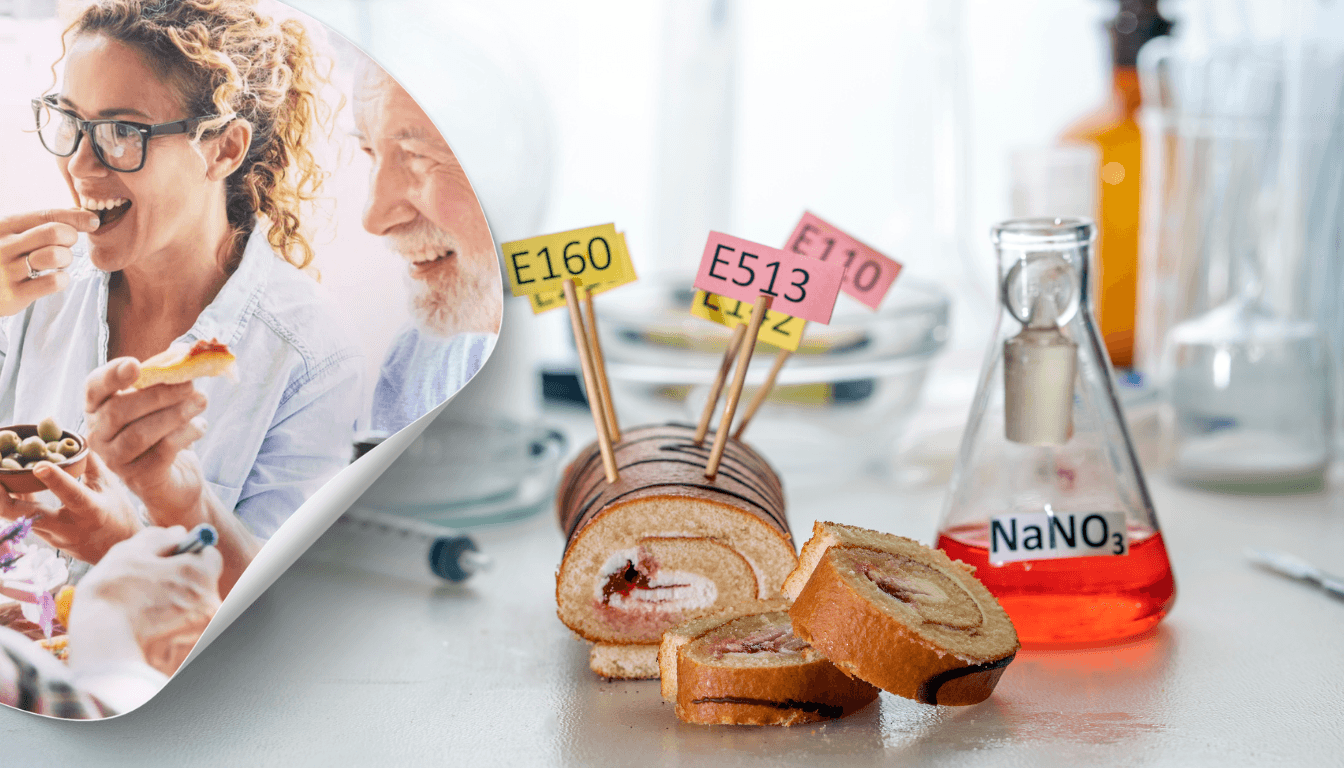
You walk into an American supermarket. You grab a box of cereal, a loaf of bread, a candy bar. The ingredients list looks harmless, colorful, preserved, shelf-stable. What you don’t see on that label is the difference that matters: many of the chemicals in that food are banned in Europe, Canada, and Australia.
This isn’t a coincidence. It’s a fundamental difference in how the United States and other developed nations approach food safety. The European Food Safety Authority (EFSA) operates on the principle of precaution, prove an additive is safe before it enters the food supply. The U.S. FDA operates on permission, prove an additive is harmful before we ban it.
The result? Americans are eating chemicals that Europeans learned to avoid decades ago.
🔑 Key Takeaways
- The US allows 10,000+ chemicals in food; most of Europe allows fewer than 300. This regulatory gap means Americans are exposed to additives banned elsewhere.
- Red Dye 3 was banned by the FDA in January 2025, 35 years after research linked it to cancer. It’s already banned in the EU.
- Titanium dioxide (E171), potassium bromate, and azodicarbonamide are banned in Europe but still legal in US food production.
- The FDA’s “GRAS” system lets food companies declare their own additives safe without FDA pre-approval, a system the EU rejected long ago.
- The difference is about philosophy: Europe asks “Is this safe?” before approving. The US asks “Is this proven harmful?” before banning.
- California and other US states are stepping in with their own bans since the federal government lags decades behind international standards.
- Reading labels matters more in the US than anywhere else in the developed world, food you eat legally here might be contraband in France.
- Your choices, organic, imported EU products, food awareness, directly impact your exposure to these additives.
Updates (2025–2026): This post incorporates the FDA’s January 2025 ban on Red Dye No. 3 (erythrosine), the EU’s continued titanium dioxide ban (expanded 2021), WHO’s JECFA 2025 food additive safety evaluations, state-level legislation from 38 US states banning additives (2025), and the latest international regulatory positions from Canada, Australia, and Japan.
The Core Problem: Two Different Food Philosophies
The gap between American and European food safety standards isn’t new, but it’s widening. Here’s why:
The European Approach: Precautionary Principle
In Europe, before a food additive can be used, manufacturers must:
- Submit comprehensive safety data
- Have it independently reviewed by the EFSA
- Prove it’s safe at the proposed levels of use
- Submit to regular re-evaluation every 5–10 years
If the evidence is insufficient, the additive is not approved. Period.
The American Approach: Burden of Proof
In the United States, the FDA’s “Generally Recognized as Safe” (GRAS) system allows manufacturers to:
- Conduct their own safety review (or hire their own scientists)
- Declare a substance “GRAS” without FDA pre-approval
- Begin using it in food immediately
- Expect the FDA to ban it only if they can prove it’s harmful
The result? Over 10,000 chemicals are used as food additives in the US. Nearly all of these were approved after 2000, and most were never independently reviewed by the FDA.
The Real-World Impact: What You’re Eating Right Now
When you eat a donut in the US, it might contain:
- Potassium bromate (a dough conditioner, likely banned where you live)
- Yellow 5 and Red 40 (artificial dyes, restricted in Europe)
- BHA or BHT (preservatives, banned in the EU)
- Azodicarbonamide (another dough conditioner, banned in Europe since 2005)
The same donut sold in a European supermarket? None of those. It uses different colorants, different preservatives, different dough conditioners, all approved under stricter standards.
This isn’t about one bad additive. It’s a systematic difference in which chemicals are allowed into your food supply.
The Timeline: How Long Does It Really Take to Ban Something?
Red Dye 3 (Erythrosine): A Case Study in Delay
1990: Research suggests Red Dye 3 may cause cancer at high doses. FDA flags it.
1990–2005: Years pass. The dye remains legal while “further study” continues.
2005–2024: Red Dye 3 is used in thousands of foods, desserts, candies, medicines, dental products, across the US and Canada.
January 15, 2025: The FDA finally bans it, citing the Delaney Clause and evidence of carcinogenicity in animal studies.
Meanwhile in Europe: Red Dye 3 has been banned or severely restricted for decades. European children never ate it.
The math: 35 years from “this might cause cancer” to “okay, stop using it.”
Food Additives Banned in Europe But Still Legal in the USA
| Additive | Common Use | EU Status | US Status | Health Concerns |
|---|---|---|---|---|
| Potassium Bromate | Dough conditioner in bread | ❌ Banned | ✓ Legal | Cancer risk (animal studies) |
| Azodicarbonamide (ADA) | Dough whitener/conditioner | ❌ Banned since 2005 | ✓ Legal | Forms semicarbazide (carcinogen) when heated |
| Titanium Dioxide (E171) | Whitening agent, colorant | ❌ Banned (2021) | ✓ Legal, widely used | Potential nanotoxicity, gut inflammation |
| Red Dye 3 (Erythrosine) | Food coloring | ❌ Banned/restricted | ❌ Banned Jan 2025 | Carcinogen at high doses |
| BHA (Butylated Hydroxyanisole) | Preservative | ⚠️ Restricted | ✓ Legal | Endocrine disruptor, cancer risk |
| BHT (Butylated Hydroxytoluene) | Preservative | ⚠️ Restricted | ✓ Legal | Endocrine disruptor, tumor formation |
| Brominated Vegetable Oil (BVO) | Emulsifier in drinks | ❌ Banned | ❌ Banned 2023 | Toxic accumulation in body fat |
| Yellow 5 (Tartrazine) | Food coloring | ⚠️ Restricted/labeled | ✓ Legal | Allergic reactions, hyperactivity in children |
| Yellow 6 (Sunset Yellow) | Food coloring | ⚠️ Restricted/labeled | ✓ Legal | Allergic reactions, behavioral effects |
| Sodium Nitrite/Nitrate | Preservative in cured meats | ⚠️ Tightly limited | ✓ Allowed | Forms nitrosamines (carcinogens) |
| Propylparaben | Preservative | ❌ Banned | ✓ Legal | Endocrine disruptor, fertility issues |
| TBHQ (Tertiary Butylhydroquinone) | Synthetic antioxidant | ⚠️ Limited | ✓ Legal | Neurotoxicity, immune damage at high doses |
Global Perspectives: How Different Countries Handle Additives
The United States is not alone in allowing controversial additives, but it’s increasingly isolated among developed nations:
| Region | Philosophy | Example Actions | Timeline |
|---|---|---|---|
| European Union | Precautionary (prove safe first) | Banned titanium dioxide, potassium bromate, azodicarbonamide | Continuous updates; re-evaluations every 5–10 years |
| Canada | Cautious-moderate | Restricted certain dyes, reviewing potassium bromate | Slower than EU but faster than US |
| Australia | Cautious-moderate | Banned/restricted similar additives to EU | Aligned with international standards |
| Japan | Precautionary-strict | Bans many additives, stricter than EU in some cases | Conservative approach since 1960s |
| United Kingdom | Post-Brexit: stricter | Moving toward EU alignment; considering additional bans | Transitioning from EU standards |
| United States | Permissive (prove harmful first) | Red Dye 3 ban (2025), BVO ban (2023), others still debated | Decades behind international standards |
The Most Dangerous Additives Still Legal in the US
1. Potassium Bromate: The Dough Conditioner
What it does: Makes bread dough stronger and more elastic, improving rise and texture.
Where it’s found: Over 130 brands of bread, rolls, bagels, and flour products in the US.
Why it matters:
- Banned in the EU since 1994.
- Banned in Canada, Japan, Australia.
- Converts to bromate, which is a known carcinogen in animal studies.
- Studies show potassium bromate causes kidney and thyroid tumors in rats.
US Status: Still legal, though California will ban it in 2027.
What to do: Read bread labels. Look for “unbromated flour” or buy EU-imported bread products if available.
2. Titanium Dioxide (E171): The Whitening Agent
What it does: Makes foods whiter and brighter, appears in candies, donuts, cake frostings, creamer, chewing gum.
Where it’s found: Thousands of processed foods in the US; nearly absent in EU products.
Why it matters:
- Banned in the EU since 2021 after research showed potential neurotoxicity and gut inflammation.
- France banned it in 2020, years before the EU-wide ban.
- Manufactured as nanoparticles, particles so small they may cross the gut barrier and accumulate in organs.
- Studies suggest it may trigger inflammatory responses and alter gut bacteria in sensitive individuals.
US Status: Still legal and widely used. The FDA has not banned it despite consumer advocacy.
What to do: Avoid ultra-processed foods with artificial white coloring. Check ingredient lists for “titanium dioxide” or “E171.”
3. Azodicarbonamide (ADA): The Dough Whitener
What it does: Whitens dough and improves conditioning in baked goods.
Where it’s found: Commercial bread, bagels, donuts, and some frozen foods.
Why it matters:
- Banned in the EU since 2005, over 20 years ago.
- Banned in Australia and several other countries.
- When heated, ADA breaks down into semicarbazide, a potential carcinogen linked to tumor formation in animal studies.
- The heating process in baking is exactly when this conversion happens.
US Status: Still legal. The FDA has allowed it for decades despite the EU ban.
What to do: Look for bread labeled “ADA-free” or “unbromated, unbleached flour.” EU imports or artisanal breads are typically free of this.
4. BHA & BHT: The Synthetic Preservatives
What they do: Prevent oils and fats from becoming rancid; extend shelf life.
Where they’re found: Cereals, chips, butter, vegetable oils, baked goods.
Why it matters:
- BHA is banned in the EU and listed as a carcinogen in California.
- BHT is restricted in the EU and considered an endocrine disruptor.
- Animal studies show both cause tumors and hormone disruption.
- They accumulate in body fat over time.
US Status: Still legal despite California’s carcinogen listing.
What to do: Buy foods with natural preservatives (vitamin E, rosemary extract) instead. Check labels for “BHA-free” or “BHT-free.”
5. Artificial Food Dyes: Red 40, Yellow 5, Yellow 6
What they do: Color foods to make them more appealing (candy, sodas, cereals, snack foods).
Where they’re found: Nearly every brightly colored processed food in US supermarkets.
Why it matters:
- Red 40 is banned in Norway and Finland.
- Yellow 5 (Tartrazine) requires labeling in the EU due to allergic reactions and behavioral effects.
- Yellow 6 is restricted in several EU countries.
- Studies link synthetic dyes to hyperactivity in children and allergic reactions.
- Many dyes contain benzidine, a known carcinogen.
US Status: Still legal. The FDA allows them despite evidence of behavioral effects in children.
What to do: Look for naturally colored foods (beet juice, turmeric, spirulina) instead. EU candy uses natural colorants instead of synthetic dyes.
6. Sodium Nitrite & Sodium Nitrate: The Cured Meat Preservatives
What they do: Preserve processed meats (bacon, hot dogs, deli meats) and give them their pink/red color.
Where they’re found: Nearly all cured, smoked, or processed meats.
Why it matters:
- Tightly regulated in the EU with strict limits.
- Form nitrosamines (known carcinogens) during digestion and cooking.
- Linked to colon cancer in multiple studies.
- The WHO classifies processed meat (preserved with nitrites) as carcinogenic to humans (Group 1).
US Status: Still legal and widely used. The FDA has not restricted it significantly.
What to do: Limit processed meats or choose uncured varieties (nitrite-free). Buy cured meats from EU where regulations are stricter.
7. TBHQ: The Synthetic Antioxidant
What it does: Preserves oils and fats; extends shelf life.
Where it’s found: Crackers, cereals, fried foods, fast food.
Why it matters:
- Banned or severely restricted in many countries.
- Studies show neurotoxicity and immune system damage at high doses.
- Can accumulate in body tissues over time.
- EU has significantly limited its use.
US Status: Still legal. Allowed at up to 0.02% by weight in foods.
What to do: Choose fresh or naturally preserved foods. Avoid ultra-processed snacks and fast food.
The GRAS Problem: Why US Food Companies Can Declare Their Own Additives Safe
Here’s where the American system breaks down most dramatically:
Under the GRAS (Generally Recognized as Safe) designation, food manufacturers can:
- Self-declare a substance safe without FDA pre-approval
- Hire their own scientists to conduct safety studies
- Use the additive immediately in food
- Have the FDA intervene only if someone challenges it or it causes obvious harm
This means:
- The FDA doesn’t pre-approve most new additives, companies do
- The conflict of interest is built in, the company selling the additive funds the safety research
- There’s no independent verification before the chemical enters millions of American mouths
The European equivalent? The EFSA independently reviews all new additives before approval. Companies cannot self-declare. The burden of proof is on them, and the review is public.
Result: American food contains chemicals that would never pass EU scrutiny.
Why Europe Banned These Additives (And the US Hasn’t)
The Precautionary Principle
Europe’s approach is built on this logic:
- If a chemical might cause harm, don’t use it until we’re sure it’s safe
- If evidence is mixed or limited, reject it
- Err on the side of consumer protection
The FDA’s Risk-Based Approach
The US approach is built on this logic:
- A chemical is allowed until proven harmful
- “Proven” usually means strong evidence in humans (not just animal studies)
- If a company disputes the evidence, it stays legal while debate continues
Real-world example: Potassium bromate causes tumors in rat studies. Europe says: “That’s enough, ban it.” The US says: “We need human studies, and even then, only at high doses.” Three decades later, the chemical is still in bread.
The California Effect: States Leading Where Federal Government Lags
Since the FDA has been slow to act, individual US states have stepped in:
California (2023–2027) banned:
- Red Dye 3
- Potassium bromate
- Brominated vegetable oil
- Propylparaben
Other states (2025) introduced over 140 bills to restrict food additives:
- New York, Illinois, Vermont, Massachusetts
- Focus on dyes, preservatives, and chemicals linked to cancer/behavioral issues
Why this matters: State bans force food companies to make a choice, reformulate nationwide or lose the California market (12% of the US population). Many companies are choosing to reformulate.
Additives Worth Using With Caution (Even in the EU)
Some additives are allowed in both the US and EU but have health concerns worth knowing about:
MSG (Monosodium Glutamate)
- Status: Allowed in both US and EU
- Common in: Asian foods, soups, snack foods, fast food
- Concerns: Some people report headaches, sweating, heart palpitations (“Chinese Restaurant Syndrome”), though this is debated
- What to do: If you’re sensitive, look for MSG-free labels
Xanthan Gum & Guar Gum
- Status: Allowed in both regions
- Common in: Salad dressings, sauces, gluten-free products, ice cream
- Concerns: Can cause bloating, gas, digestive distress in sensitive individuals
- What to do: If you have IBS or sensitive digestion, minimize these thickening agents
Aspartame
- Status: Approved in both US and EU (since 1974 in US, 1997 in EU)
- Common in: Diet sodas, sugar-free foods, beverages
- Concerns: Ongoing debate; both FDA and EFSA say it’s safe at current levels
- What to do: If concerned, choose sugar alternatives with a longer safety record (stevia)
How to Read a Label Like a Food Safety Expert
Step 1: Know the Danger Zone
Look for these red flags:
- Artificial dyes (Red 40, Yellow 5, Yellow 6, Blue 1, etc.)
- Synthetic preservatives (BHA, BHT, TBHQ)
- Dough conditioners (potassium bromate, azodicarbonamide)
- Nitrite/nitrate (in processed meats)
- Titanium dioxide (whitening agent)
Step 2: Compare to Alternatives
If you see any of these, ask: Is there a competitor product without it?
Example:
- Store-brand Frosted Flakes (likely has artificial dyes) vs. Honey Bunches of Oats (natural coloring)
- Mass-market bread with potassium bromate vs. local bakery bread
- EU candy import (natural dyes) vs. American candy (synthetic dyes)
Step 3: Check the Origin
- EU-imported foods are often safer by default (stricter regulations)
- Organic-certified foods exclude many synthetic additives
- “Natural” claims don’t mean much, check the actual ingredient list
Practical Steps to Reduce Your Exposure
1. Shift Your Shopping
- Buy more whole foods (produce, grains, meat, dairy without additives)
- Choose minimally processed options, fewer ingredients = fewer additives
- Buy EU imports for specific products (chocolate, candy, beverages)
- Support local bakeries over mass-market bread
2. Read Strategically
- Focus on ultra-processed foods (cereals, snacks, candies) where additives concentrate
- Ignore marketing claims (“natural,” “wholesome”), read the ingredient list
- Apps exist (e.g., “Clean Label”) to scan barcodes and flag concerning additives
3. Know Your Priorities
You can’t avoid all additives without extreme effort. Pick battles:
- Avoid for sure: Potassium bromate, titanium dioxide, synthetic dyes in children’s foods
- Minimize: Processed meats, ultra-sweet beverages, artificial sweetened products
- Less critical: Small amounts of gums and emulsifiers in occasional foods
4. Organic & Natural Products
Benefits of organic:
- No synthetic pesticides (different from additives, but overlapping concern)
- No artificial colorants or preservatives
- Often uses gentler processing
Reality check:
- Organic can still use some additives (organic versions of xanthan gum, etc.)
- Organic is more expensive
- Focus on what matters most to you (produce, meat, dairy for pesticide/hormone concerns)
The Hair Test & Other Tools for Personal Food Sensitivity
Since understanding your personal food sensitivities matters, here’s how a hair sensitivity test helps:
A hair food sensitivity test reveals:
- Which additives your body specifically reacts to
- Your personal sensitivity levels (not population averages)
- Hidden food intolerances you might not have noticed
Why it matters: Some people are sensitive to MSG, certain dyes, or gums while others aren’t. A personalized test can show you exactly which additives to avoid for you, saving you from unnecessary elimination diets.
International Comparison: What Different Countries Allow
| Additive | USA | Canada | EU | Japan | Australia |
|---|---|---|---|---|---|
| Potassium Bromate | ✓ Legal | ⚠️ Restricted | ❌ Banned | ❌ Banned | ❌ Banned |
| Titanium Dioxide | ✓ Legal | ✓ Legal | ❌ Banned | ⚠️ Restricted | ❌ Banned |
| Azodicarbonamide | ✓ Legal | ✓ Legal | ❌ Banned | ❌ Banned | ❌ Banned |
| BHA | ✓ Legal | ✓ Legal | ⚠️ Restricted | ❌ Banned | ⚠️ Limited |
| Red Dye 3 | ❌ Banned (2025) | ⚠️ Limited | ⚠️ Banned/restricted | ❌ Banned | ❌ Banned |
| Yellow 5 | ✓ Legal | ✓ Legal | ⚠️ Restricted | ❌ Banned | ⚠️ Limited |
| Sodium Nitrite | ✓ Legal | ✓ Legal | ⚠️ Tightly regulated | ⚠️ Limited | ⚠️ Limited |
Advocacy: How You Can Push for Change
1. Contact Your Representatives
- State legislators: Support state-level food additive bans (California model)
- Federal: Comment on FDA proposals and advocate for stricter pre-approval of additives
2. Support Advocacy Groups
- Center for Science in the Public Interest (CSPI), pushes FDA for stronger standards
- Environmental Working Group (EWG), databases of safer products
- Safer Chemicals, Healthy Families, campaigns for chemical policy reform
3. Vote With Your Wallet
- Buy products without controversial additives, companies respond to market demand
- Choose organic and EU imports, shows demand for stricter standards
- Support state bans by buying from brands that comply early
4. Spread Knowledge
Share this information with friends and family. Consumer awareness drives market change, when millions of Americans understand the additive gap, companies reformulate.
The Big Picture: Why This Matters for Seniors
If you’re over 65, this matters even more:
- Cumulative exposure: A lifetime of additives adds up
- Reduced detoxification: Aging reduces the body’s ability to process and eliminate chemicals
- Multiple medications: Food additives can interact with prescriptions
- Inflammation: Many additives promote chronic inflammation, linked to age-related diseases
The takeaway: Reducing additive exposure becomes increasingly important as you age.
Frequently Asked Questions
Q: Are these additives really that dangerous?
A: At approved levels, most additives are considered “safe” by US standards. However, “safe” in the FDA sense means “hasn’t killed people in acute studies.” The EU standard is higher, it means “no reasonable concern of harm.” Many US-approved additives failed EU safety review. The cumulative effect of multiple additives over a lifetime is also poorly studied.
Q: Why does the FDA allow things Europe banned?
A: Different philosophies. The EFSA says “prove it’s safe first.” The FDA says “prove it’s harmful.” The EFSA also reviews additives regularly; the FDA often doesn’t. And the FDA faces significant industry lobbying to keep additives on the market.
Q: Is organic really better?
A: For additives, yes, organic bans most synthetic colorants, preservatives, and flavorings. For pesticides, organic avoids synthetic pesticides but may use natural ones. Organic typically has fewer chemicals overall, though it costs more. If budget is tight, prioritize organic for foods you eat most often.
Q: Should I avoid all food additives?
A: Practically speaking, no. Completely avoiding additives requires extreme effort. Instead, minimize exposure to the most concerning ones (potassium bromate, titanium dioxide, synthetic dyes) and don’t worry about trace amounts of gums or minor preservatives. Whole foods first; processed foods with additives sparingly.
Q: Will the US ever catch up to EU standards?
A: Slowly. State-level bans (like California’s) are accelerating change. The 2025 surge in state food additive legislation (140+ bills) shows momentum. Eventually, federal standards may align with international norms, but expect it to take years, not months.
Conclusion: Knowledge Is Power
The gap between American and European food safety standards is real, documented, and significant. You’re eating additives that Europeans rejected decades ago. That’s not fearmongering, it’s a factual difference in regulatory philosophy.
Your options:
- Understand the risk, read labels, know which additives to avoid
- Make strategic choices, buy whole foods, pick battles, support companies reformulating
- Advocate for change, support state bans, contact representatives, spread awareness
- Test your own sensitivities, understand which additives your body reacts to
You can’t control what the FDA approves, but you can control what goes into your body. And the more Americans demand safer food, the faster the market, and regulations, will shift.
This article is for informational purposes only and does not constitute medical advice. Sources: FDA Revocation Notice for Red Dye No. 3 (January 2025); European Food Safety Authority (EFSA) Banned Additives Database (2025); WHO/FAO JECFA Safety Evaluations (2025); Center for Science in the Public Interest (CSPI); Environmental Working Group (EWG); State Food Additive Legislation Report, Multistate Association (2026); Canadian Food and Drug Administration; Australia’s Food Standards Code.
Post Disclaimer
This article is for informational purposes only and does not constitute medical advice. Always consult your healthcare provider before making changes to your health routine.