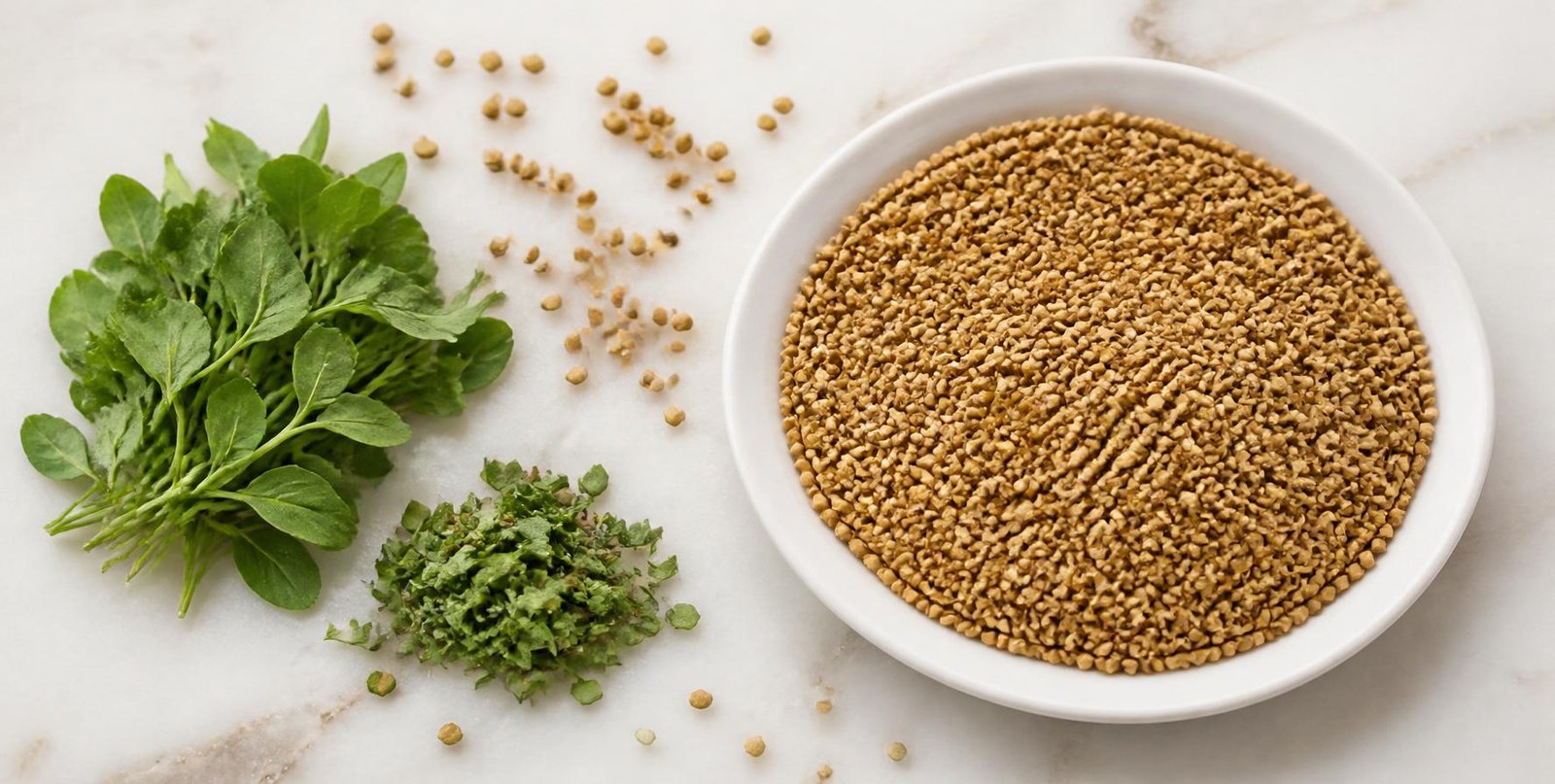
Fenugreek for Blood Sugar Control: The Ancient Herb That Regulates Glucose Naturally
How This Traditional Remedy Reduces Fasting Blood Sugar and Improves Insulin Function
Affiliate Disclosure Notice
This article contains affiliate links to products we believe support the health strategies discussed. We earn a small commission if you purchase through these links at no extra cost to you. Read our full affiliate disclosure for details.
What Is Fenugreek and Why Is It Powerful for Diabetes?
Fenugreek, a common herb, is being looked at for managing blood sugar. Herbal supplements like fenugreek are being studied for their health benefits. Research shows fenugreek can lower blood sugar and improve cholesterol levels.
Fenugreek has been used in traditional medicine for thousands of years – dating back to ancient Egypt. But modern science is now revealing why it works so well for blood glucose control. In fact, some research suggests fenugreek is nearly as effective as certain diabetes medications for some people.
The secret lies in fenugreek seeds, which contain a unique combination of soluble fiber and compounds that directly improve glucose metabolism.
How Fenugreek Works to Lower Blood Sugar
Mechanism 1: High in Soluble Fiber
Fenugreek seeds are about 50% fiber, with much of it being soluble. This soluble fiber:
- Slows carbohydrate digestion
- Reduces glucose absorption from food
- Prevents sharp blood sugar spikes after meals
The effect is similar to adding soluble fiber to your diet, but concentrated in fenugreek.
Mechanism 2: Reduces Fasting Blood Glucose
Studies show fenugreek directly lowers fasting blood glucose – the glucose level when you haven’t eaten for 8+ hours. This suggests it affects how your liver produces glucose between meals.
Mechanism 3: Increases Insulin Secretion
Fenugreek may stimulate your pancreas to produce more insulin. This is particularly helpful for people with type 2 diabetes, whose pancreas often underproduces insulin due to beta cell dysfunction.
Mechanism 4: Improves Insulin Sensitivity
Beyond just producing more insulin, fenugreek helps your cells respond better to insulin. It improves the lock-and-key fit between insulin and insulin receptors.
Mechanism 5: Reduces Intestinal Glucose Absorption
Some compounds in fenugreek (including 4-hydroxyisoleucine) inhibit enzymes that break down carbohydrates. This means less glucose enters your bloodstream per meal.
Clinical Evidence: What Studies Show
Major Clinical Trials
2009 Study (Journal of Medicinal Food):
- 30 people with type 2 diabetes
- Fenugreek seeds (10 grams daily) for 24 weeks
- Result: Fasting blood glucose decreased from 151 to 125 mg/dL
- A1C improved from 8.2% to 7.5%
- LDL cholesterol also improved
2009 Study (Nutrition & Metabolism):
- 60 people with type 2 diabetes
- Fenugreek powder (25 grams twice daily) for 8 weeks
- Result: Significant reduction in fasting glucose and A1C
- Improved insulin sensitivity markers
2010 Meta-Analysis:
- Reviewed 5 randomized controlled trials
- All showed significant reduction in fasting blood glucose
- Effect size: 30–40 mg/dL reduction
Prevention Data: The Prediabetes Study
2007 Study (Diabetes Care):
- Tracked prediabetic people in India for years
- Those consuming 10 grams of fenugreek daily
- Result: 56% lower rate of progression to type 2 diabetes
- Better than many pharmaceutical interventions
This suggests fenugreek is particularly powerful for prevention.
How to Take Fenugreek
Effective Dosage
Research showing blood sugar benefits used:
- 5–15 grams of fenugreek seeds daily (most common range)
- 10 grams is the sweet spot for most people
- Divided into 2 doses (morning and evening) works well
Forms of Fenugreek
Whole Fenugreek Seeds (Most Effective)
- Soak overnight in water or steep as tea
- Cost: $0.50–$1 daily
- Advantage: Highest nutrient density
- Disadvantage: Taste (bitter, maple-like)
Fenugreek Powder (Convenient)
- Mix into oatmeal, yogurt, soups
- Cost: $0.30–$0.60 daily
- Advantage: Easier to use
- Disadvantage: Less fresh than whole seeds
Fenugreek Supplements (Capsules)
- Standardized dose, easy to take
- Cost: $0.50–$1.50 daily
- Advantage: Convenient, precise dosing
- Disadvantage: May contain fillers
How to Take It
Best Methods:
Overnight soak:
- Soak 1 teaspoon (5 grams) in 1 cup water overnight
- Drink the water + eat the seeds in morning
- Effect: Stronger
Fenugreek tea:
- Steep 1 teaspoon seeds in hot water for 10 minutes
- Drink 2–3 times daily
- Effect: Steady glucose support
Mixed into food:
- Stir powder into oatmeal, soup, curry
- Dose: 5–10 grams per day
- Effect: Less noticeable taste
Supplements:
- Take with meals
- Follow bottle directions (typically 1–3 capsules daily)
Timeline for Results
- Week 1–2: Slight improvements in energy, no major glucose changes
- Week 2–4: Fasting blood glucose begins to decline
- Week 4–8: Noticeable improvement in post-meal glucose stability
- Week 8–12: Full effects visible in A1C testing
Side Effects and Tolerability
Common Side Effects
Taste and Smell (Very Common)
- Fenugreek has a distinctive maple-like smell
- Some people’s sweat smells of maple syrup
- Solution: Not dangerous, usually fades after 1–2 weeks; use capsules if bothered
Gastrointestinal Effects (Mild)
- Gas or bloating (in first 1–2 weeks)
- Loose stools (less common)
- Solution: Start with lower doses, gradually increase; drink plenty of water
Nausea (Rare)
- Occurs with very high doses on empty stomach
- Solution: Always take with meals
Safety Profile
Fenugreek is very safe for most people. It has a long history of use in traditional medicine with minimal reported toxicity.
Important Precautions and Contraindications
Avoid Fenugreek If:
✗ Pregnant
- Fenugreek can stimulate uterine contractions
- May trigger miscarriage
- Strictly avoid in pregnancy
✗ Breastfeeding
- Fenugreek passes into breast milk
- Safety for infants not established
- Avoid or consult doctor first
✗ Allergic to legumes
- Fenugreek is a legume; may trigger cross-reactivity
- Test with very small amount first
✗ Scheduled for surgery
- Fenugreek may affect blood sugar during anesthesia
- Stop 1–2 weeks before surgery
- Inform surgical team
Use With Caution:
⚠ Low blood sugar
- Since fenugreek lowers glucose, risk of hypoglycemia increases
- Monitor blood sugar closely
- Combine with diabetes meds cautiously
⚠ Hormone-sensitive conditions
- Fenugreek contains compounds with mild estrogenic effects
- Not recommended for hormone-sensitive cancers
- Consult doctor if concerned
Drug Interactions
Medications That May Interact
Diabetes medications (metformin, insulin, sulfonylureas)
- Additive blood sugar-lowering effect
- Risk: Hypoglycemia (low blood sugar)
- Solution: Monitor glucose closely; doctor may adjust medication
Blood thinners (warfarin, clopidogrel)
- Fenugreek has mild anticoagulant properties
- Additive effect possible
- Solution: Inform doctor; may need monitoring
Iron supplements
- Fenugreek fiber may reduce iron absorption
- Solution: Take 2+ hours apart
Thyroid medications
- No direct interaction, but fenugreek high in iron – may interfere with thyroid meds
- Solution: Take 2+ hours apart from thyroid medication
Fenugreek vs. Other Blood Sugar Herbs
| Herb | Strength | Effect Size | Best For |
|---|---|---|---|
| Fenugreek | Moderate, high fiber | Modest-Moderate | Prevention, prediabetes |
| Gymnema | Moderate | Moderate | Sugar cravings, glucose control |
| Berberine | Very strong | Large | Serious blood sugar lowering |
| Cinnamon | Mild | Small-Modest | Gentle support, prediabetes |
| Chromium | Mild-Moderate | Small-Modest | Insulin function support |
Fenugreek is excellent for prevention and prediabetes. For established type 2 diabetes, combine with berberine or other stronger interventions.
Real-World Results
Case 1: Anita, Age 54 (Prediabetes)
- Fasting glucose 108 mg/dL, A1C 5.8%
- Started fenugreek (10 grams daily) + diet changes
- Week 6: Fasting glucose 102
- Week 12: Fasting glucose 98, A1C 5.4% (normal range!)
- Result: Reversed prediabetes without medication
Case 2: Paul, Age 58 (Type 2 Diabetes)
- On metformin 1,000 mg twice daily, A1C 7.3%
- Added fenugreek (10 grams daily) with doctor approval
- Week 8: Post-meal glucose more stable
- Week 12: A1C improved to 6.9%, metformin dose reduced
- Result: Better control, lower medication dose
Case 3: Rajesh, Age 45 (Very High Blood Sugar)
- Fasting glucose 160 mg/dL, A1C 8.5%
- Started fenugreek (15 grams daily) + berberine + lifestyle changes
- Week 4: Fasting glucose 140
- Week 8: Fasting glucose 120
- Week 12: A1C 7.6%, significant improvement
- Ongoing: Combined supplement approach working well
Combining Fenugreek With Other Approaches
Works Well With
✓ Other herbs (cinnamon, gymnema – complementary effects)
✓ Minerals (chromium, magnesium – synergistic)
✓ Powerful agents (berberine – combines gentleness with potency)
✓ Soluble fiber (psyllium – additive effect)
✓ Diet changes (low glycemic index – foundational)
Best Timing
- Morning dose (improves fasting glucose control)
- Evening dose (if taking higher amounts, supports overnight glucose)
- With meals (soluble fiber effect better with food)
Storage and Quality
How to Store Fenugreek
- Whole seeds: Cool, dry place in airtight container
- Powder: Airtight container, away from light and heat
- Supplements: Follow bottle directions
Fenugreek keeps well for 1–2 years if stored properly.
What to Look For
✓ Third-party tested (NSF, USP)
✓ No added fillers or binders
✓ Reputable brand
✓ Whole seeds if possible (highest nutrient density)
FAQ
How quickly does fenugreek lower blood sugar?
Initial improvements: 2–4 weeks. Full effects: 8–12 weeks. Some people notice better post-meal stability within days.
Can I use fenugreek instead of my diabetes medication?
Never stop medication without doctor approval. For prediabetes, fenugreek alone may be sufficient. For established diabetes, it works best combined with medication.
Is fenugreek safe long-term?
Yes. Studies using fenugreek for months and years show no safety concerns. Long-term use is safe.
Why does fenugreek smell like maple syrup?
The compound sotolon gives fenugreek its maple-like aroma. It’s harmless but can be noticeable in sweat and urine.
Can children take fenugreek?
Fenugreek is safe in food amounts for children. Supplement dosing should be discussed with a pediatrician.
Which is better: whole seeds or powder?
Whole seeds have slightly higher nutrient density. Powder is more convenient. Either works – choose based on preference.
How much fenugreek seed equals a supplement capsule?
Typically 1 capsule ≈ 500 mg seeds. So 10 grams daily = 20 capsules or 2 teaspoons of seeds.
Disclaimer
This article is for informational purposes only and does not constitute medical advice. Always consult your healthcare provider before starting fenugreek, especially if you’re pregnant, breastfeeding, taking diabetes medications or blood thinners, or have hormone-sensitive conditions.
Related Articles
- Berberine for Diabetes Management
- Gymnema Sylvestre for Diabetes
- Lower Blood Sugar Naturally: The Complete Guide
Post Disclaimer
This article is for informational purposes only and does not constitute medical advice. Always consult your healthcare provider before making changes to your health routine.